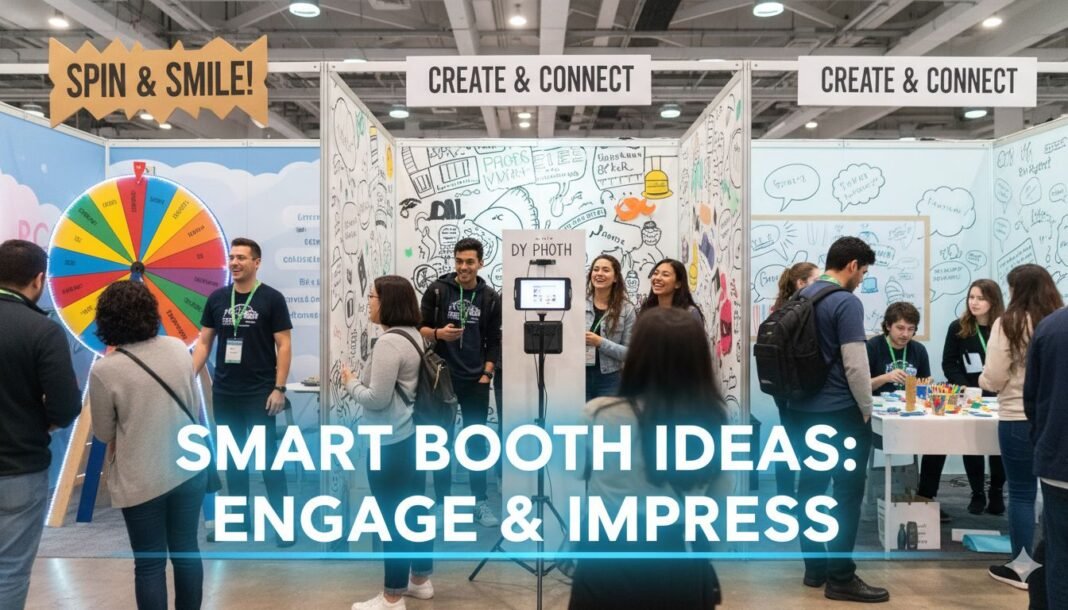
Let’s face it — not every brand walks into a trade show with deep pockets. Most exhibitors, especially startups or mid-sized businesses, are working under tight budgets. You’ve got limited space, limited time, and maybe a handful of team members — yet you want people to stop, engage, and remember your booth.
Sounds like a tall order, right?
Here’s the truth: it’s absolutely possible to make your booth the most talked-about spot at the event without spending like a Fortune 500 company. All you need is a dash of creativity, some storytelling, and clever use of trade show booth games or interactive tools that cost way less than you think.
1. The Real Power of “Wow” Moments (Even on a Small Budget)
Visitors don’t remember the biggest booth; they remember the most engaging one.
A few months ago, I attended an event where one of the smallest stalls — just a 10×10 setup — had people queued up. Their secret? A simple mobile-based quiz game themed around their product benefits. No expensive screens, no lighting effects — just a game that made people smile and compete.
That’s what engagement is all about: emotion first, equipment second.
And that’s exactly where custom branded games come in handy. You can create games that represent your brand’s story — a simple spin-the-wheel for giveaways, a drag-and-drop challenge that highlights your services, or a trivia that subtly educates players about your offerings.
These experiences don’t just entertain people — they build a memory.
2. Interactive Ideas That Don’t Break the Bank
Here are some practical, budget-friendly interactive ideas you can try:
✦ QR Code Challenges
Let visitors scan a QR code that opens a mini-game on their phones. They can play, win instant points, and claim a digital badge or coupon. It’s low-cost, touchless, and super easy to set up.
✦ Leaderboard Competitions
Set up a simple screen showing top scores from a quick branded game. It creates excitement and gives people a reason to come back — “Hey, I can beat that score!”
✦ Digital Selfie Booth
No need for heavy hardware. A ring light, a phone stand, and an AR filter with your logo can create a viral photo spot.
✦ Gesture or Voice-Controlled Games
If you want to go touchless, use motion-sensor or voice triggers. People love waving their hands to pop virtual balloons or saying commands to activate something.
✦ Mini VR Demos
Even if you can’t afford a full-blown VR setup, one headset showcasing a short 1-minute experience can be a magnet. Something simple yet powerful — like a product walkthrough or a behind-the-scenes brand story.
If you want to take inspiration, explore how VR for events can be integrated even in small spaces. You’ll be surprised how affordable and adaptable it’s become.
3. Small Space, Big Engagement
One of the biggest misconceptions I hear is: “We don’t have space for interactivity.”
Totally untrue. You can create big engagement in small spaces if you focus on one central activity.
Here’s how:
- Choose one core attraction. Don’t clutter your booth with too many things.
- Build around flow. A clear start (welcome), middle (interaction), and end (reward).
- Use vertical design. Mount screens or props vertically to save floor space.
- Digitize giveaways. Instead of physical brochures, give QR-based digital gifts — cleaner and cheaper.
Remember, simplicity helps people understand what to do faster. The quicker someone knows how to interact, the faster they’re emotionally hooked.
4. Human Interaction Is Still the Secret Ingredient
Tech is great, but the real magic happens when your booth staff joins the fun. Train them to guide, not sell.
Let them cheer for players, announce scores, and share small rewards (even digital ones). When visitors see genuine enthusiasm, they stay longer — and trust me, that’s worth more than any LED wall.
I’ve seen booths with basic games outperform elaborate installations simply because the people running them made it fun.
5. Brand Integration — Subtle but Strategic
Your interactive booth doesn’t need to scream your logo every two seconds. Instead, weave your brand identity insidethe experience.
For example:
- Use your brand colors as game backgrounds.
- Feature your tagline when users complete a challenge.
- Add your products as visual elements inside gameplay.
This way, your brand becomes part of the fun — not just an ad. That’s exactly what we focus on when creating custom branded games for clients: making sure the brand feels baked in, not pasted on.
6. Use Emotion as Your Currency
Budget constraints can limit your materials, but they can’t limit your creativity. The most successful booths evoke feelings — curiosity, nostalgia, excitement, or even laughter.
Ask yourself:
What emotion do I want people to feel when they walk into my booth?
Once you define that, the design becomes simpler. Want to spark curiosity? Use AR to “reveal” something hidden. Want to create nostalgia? Use retro-style games or visuals. Want to energize people? Add music and timed challenges.
Emotion is free — and it multiplies your engagement value.
7. Keep It Social-Ready
Every visitor is a potential marketer if they post about your booth. Make sure every part of your design — from your background wall to your digital prize screens — looks great in photos.
Add small shareable hooks like:
- “Tag us and win!” screens
- A custom hashtag that’s visible in selfies
- QR codes that link to your website or replayable game
Small tweaks like these help your brand live beyond the trade show floor.
8. Measure What Matters
At the end of the day, engagement should lead to insights. Even simple digital games can track:
- Number of participants
- Average time spent per visitor
- Conversion from interaction to inquiry
These analytics help you prove ROI and justify future budgets — showing that even a small, creative setup can outperform a big, expensive booth.
Final Thoughts
You don’t need deep pockets to create deep impressions.
With a clever mix of trade show booth games, custom branded games, and even compact VR for events, you can design an experience that visitors won’t just see — they’ll feel.
The best booths are not the biggest ones — they’re the ones that make people laugh, move, and connect.
So the next time someone tells you you’re working with a “limited budget,” smile — because sometimes, limitations spark the most creative ideas.